How Do I Know Where Does AI Fits Into Our Business?

"Where does AI fit into our business?" is a question many business leaders are asking. Instead of rushing to decide which AI tools to use, there's a more business-before-technology way to answer that question.
Start by seeing how everyday work really happens in your business. Then decide what deserves a closer look, where AI might fit, and what is working just fine right now.
These are five little windows into how ordinary work happens every day. There’s nothing here you need to fix or figure out. Just notice what people do, what happens around the work, and what feels familiar.
You might nod and recognize something from your own business. Maybe you'll notice something you hadn’t thought about before. Or you might simply look at a familiar part of the work your team does every day a little differently.
Start by seeing how everyday work really happens in your business. Then decide what deserves a closer look, where AI might fit, and what is working just fine right now.
These are five little windows into how ordinary work happens every day. There’s nothing here you need to fix or figure out. Just notice what people do, what happens around the work, and what feels familiar.
You might nod and recognize something from your own business. Maybe you'll notice something you hadn’t thought about before. Or you might simply look at a familiar part of the work your team does every day a little differently.
1. Before She Answers
Your longtime customer Adele calls with a question about her renewal invoice.
Danielle pulls up Adele's account and reviews the invoice. Before answering Adele's question though, she scrolls through a few notes from past conversations. Then she opens an email from several months ago.
She walks over to Kevin and asks, “Wasn't there something different about how we handle this customer?”. Kevin remembers that they had agreed to something slightly different when the customer renewed.
Danielle goes back to the call and answers the question. Adele thanks Danielle for her help and ends the call. Danielle updates the account notes and moves on to the next thing on her to do list.

2. The Spreadsheet and the System
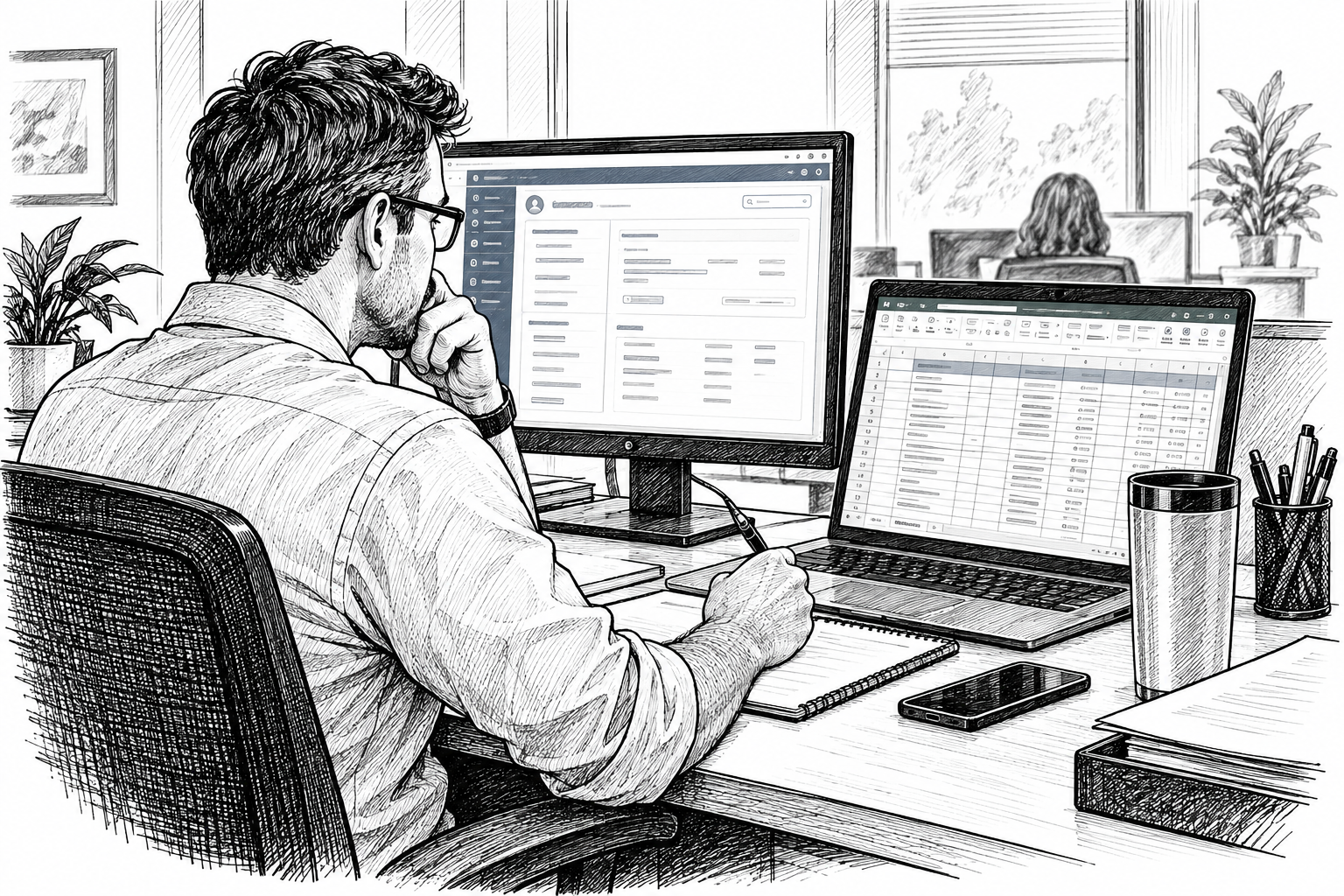
Every morning, Marcus signs into the company's accounting software. Then he opens a spreadsheet saved on his laptop.
He checks yesterday's activity in the application and adds a few things to his spreadsheet. Later that morning, someone stops by and asks him a question. Marcus looks at the spreadsheet rather than the accounting application before answering. At lunchtime, he adds another note.
Marcus continues to make notes and update his spreadsheet instead of relying on the accounting software everyone uses.
Tomorrow morning, he'll sign in to the software and open his spreadsheet again.
3. Before It Goes Out
Priya finishes a customer proposal. Everything looks complete, but before sending it, she asks Tom to take a quick look.
Tom reads it, points to one sentence, and says, "I'd say this differently. Remember what happened the last time we talked with them?" Priya remembers all too well and changes the sentence.
Tom goes back to what he was doing. Priya sends the proposal. Five minutes later, they're both working on something else.

4. Ask Maria
Someone has a question and asks Maria for her help.
Later, someone else stops at Maria's desk and asks, "Do you remember what we did with the Wilson account last month?" Maria does.
That afternoon another coworker messages her about which form to use for an unusual situation. Maria sends back the answer and continues working. None of the interactions lasts very long. Nobody seems frustrated. Nobody talks about Maria being the person who knows things.
It's just another Wednesday.

5. The Ten-Minute Conversation
A project meeting ends at 10:00. Everyone has their assignments, the meeting notes are saved, and people start leaving.
James and Elena stay behind to discuss something they're both unclear about. "What did you think she meant when she said they wanted this to be simpler?"
They talk for a few minutes about the customer, something that came up in an earlier meeting, and what they think the customer is really trying to accomplish.
At 10:10, they leave too. Nothing from their conversation gets added to the meeting notes. Both go on to the next meeting.

What Leaders Are Asking About How AI Fits in Their Business
"Don't I already know how work happens in my business?"
You know your customers, your people, your systems, and how things generally get done. But much of what keeps work moving is so ordinary that nobody has a reason to stop and look at it. How Work Happens Here creates that opportunity without assuming something is wrong.
"What am I supposed to be looking for?"
Don't think of this as an assignment with right and wrong answers.
That's important. You're not starting with a list of problems to find. People simply pay attention to moments in their normal work. It might be a question they stopped to think about, something they checked before moving on, a conversation that helped clarify something, an exception, a workaround, something they remembered.
"What happens when we notice something that we want to remember?"
Remembering is a great way to think about what you're doing. Someone wanted to remember a moment.
Seeing something doesn't mean you need to change it. You might understand why it happens the way it does. You might want to look at it more closely. Or it might connect with something else you've been thinking about. The decision about what deserves attention comes later.
"How much work does this create for my employees?"
Instead of pulling people into time-sucking meetings or tedious documentation assignments, people work like they always do. They notice a moment that they want to remember. "This just happened. I want to share this with Sue.".
We've created a simple notes page for everyone. No fancy tech. It's not a tedious form to complete, Its' just a convenient place to save everything your team is noticing while they're working.
"What if we're just trying to figure out how to do something with AI?"
You're not alone. That's where a lot of leaders are so we created The Work Before AI to answer that question. This is a one-time seven days of noticing how work happens every day.
"Why does noticing everyday work matter beyond these individual moments?"
Because work doesn't happen by itself.
The customer question, the spreadsheet outside the application, the conversation after the meeting—all of those small moments happen because people want to keep their work moving along.
Your team is using technology. They're working within guidelines and procedures adopted over time. They're responding to customers, coworkers, vendors, changing expectations and things happening outside the company.
A single moment can tell you something. But what becomes more interesting over time is what you can see when those moments have context.
For example, maybe the spreadsheet Marcus keeps open makes more sense when we know something about the software he's working around. Maybe a change from that software provider affects why he works that way. Maybe something people repeatedly do begins to look different when we see it alongside what the technology is doing.
"How does this practically benefit our company?"
We get it. The idea of noticing work sounds interesting, but there needs to be something more useful than a collection of notes.
That's where the dots start connecting. You know from our conversations that we ask a lot of questions about your company, your customers, the everyday things that make business happen. We're learning and understanding what's important to you.
Quest Clarity meanwhile runs in the background noticing too. It continually gathers information about the tools, applications, and devices that are a vital part of your company's technology foundation. We notice who has access to your valuable information.
That's a lot of information that by itself is useful but not always meaningful. When we start connecting it in ways that are relevant to your company, you have the insights and context that help you and your team make informed decisions.
Join the Coming Soon List
Quest Clarity is with our pre-launch clients now. Before we open the doors to everyone, we're gathering feedback from business leaders like you.
Just let us know that you want to be notified when it's ready. We'll share all the details with you, and then you decide if this is right for you. No pressure. No annoying sales calls. No endless emails. We don't like them so why should you?